How Music Supports Healing in Home Care Services
- Posted on May 21, 2026
By Integrated Care Management (ICM) — Serving Maryland Families for Over 25 Years
Table of Contents
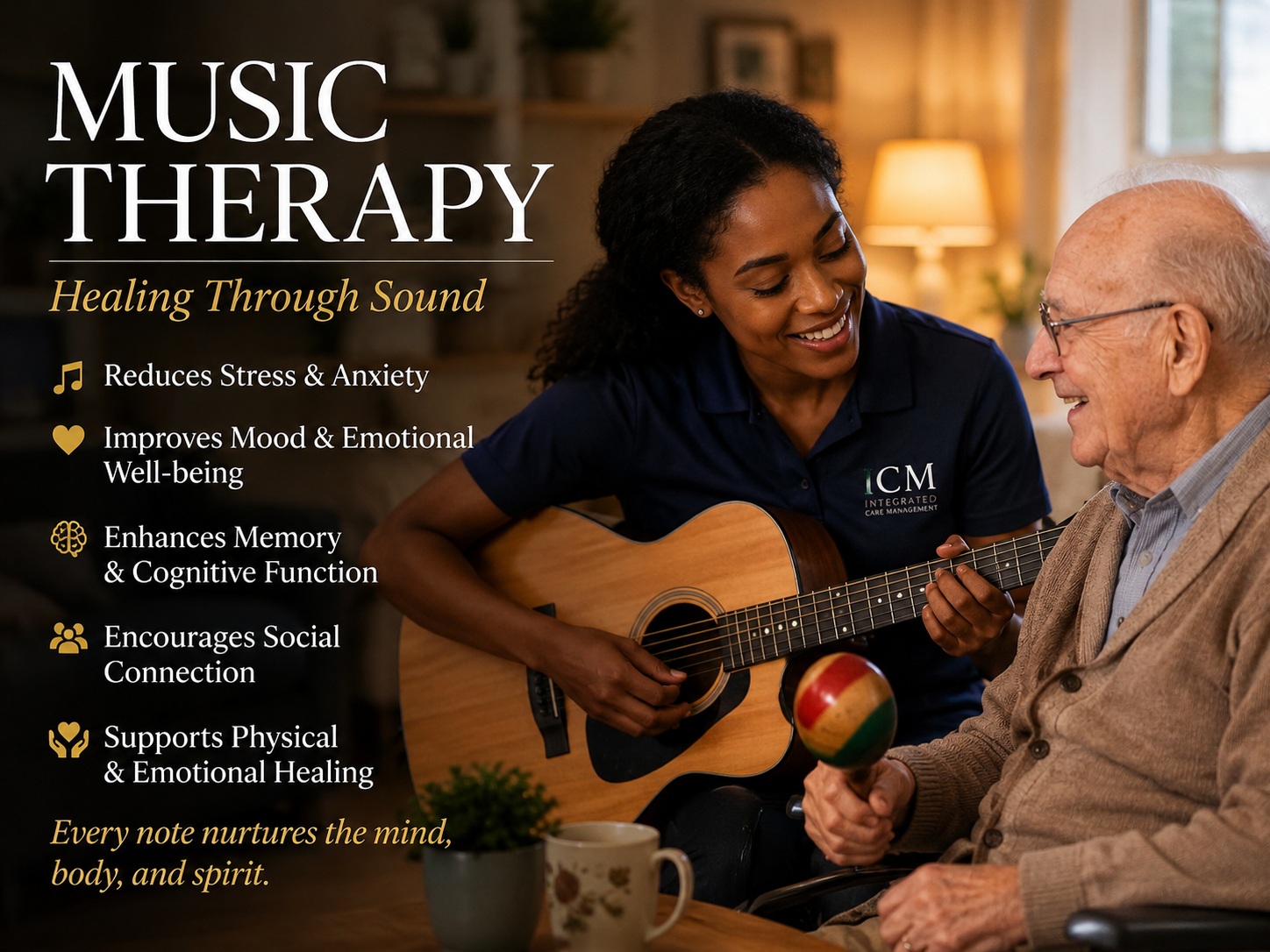
Music in home care services can play a powerful role in improving emotional wellbeing, relaxation, communication, and overall quality of life for individuals receiving care at home. Healing is not only about medications and medical treatment. True healing also involves comfort, connection, emotional support, and a sense of peace within the caregiving environment.
At Integrated Care Management, we believe compassionate home care should support the whole person physically, emotionally, socially, and mentally. Music has the ability to create calm environments, reduce emotional stress, encourage engagement, and strengthen meaningful human connection.
Whether it is soft instrumental music, worship songs, classical melodies, cultural rhythms, or favorite songs from earlier years, music can become an important part of the healing experience.
Why Music Matters in Home Care Services

Music in home care services has been used for generations to comfort, encourage, and emotionally connect people during difficult moments.
Within caregiving environments, music often becomes more than entertainment. It can support emotional stability, relaxation, communication, and social interaction.
The benefits of music in home care services may include:
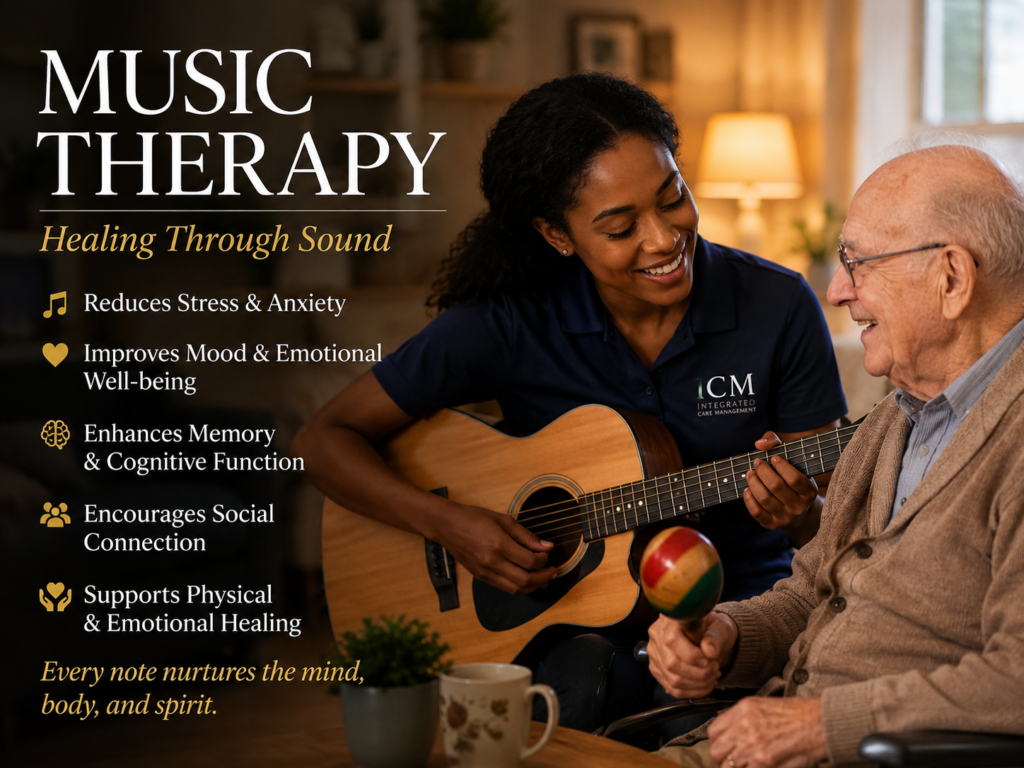
• Reduced stress and anxiety
• Emotional comfort and reassurance
• Better engagement and participation
• Increased communication
• Improved mood and relaxation
A peaceful sound environment can transform the atmosphere of care inside the home.
Music Creates Emotional Comfort
Many individuals receiving home care experience emotional stress related to illness, aging, disability, or isolation. Music can help create feelings of familiarity and emotional security. A meaningful song may remind someone of positive memories, loved ones, or comforting experiences. For many clients, music provides moments of peace that improve emotional wellbeing during challenging periods.
Music Helps Build Human Connection
Music naturally encourages shared experiences. Simple activities such as listening to favorite songs together, singing, or gentle movement can strengthen emotional connection between caregivers, clients, and family members. These moments help reduce feelings of loneliness and encourage emotional bonding within the home.
Emotional Support and Relaxation Through Music
One of the most important benefits of healing through music is emotional relaxation. Calming music may help reduce emotional tension and create a soothing caregiving environment that feels safer and more peaceful.

How Music Helps Reduce Anxiety
Many clients receiving home care may experience anxiety, confusion, sadness, or emotional overwhelm.
Soft and familiar music may help clients feel calmer during:
• Morning routines
• Therapy sessions
• Recovery periods
• Personal care activities
• Rest and relaxation times
When clients feel emotionally relaxed, caregiving routines often become smoother and more comfortable.
Creating a Peaceful Care Environment
The atmosphere within a home can strongly affect emotional wellbeing.
Playing calming music during daily routines may help create a nurturing and emotionally supportive environment for both the client and caregiver.
Peaceful environments often encourage better cooperation, comfort, and emotional stability.

Memory Stimulation and Cognitive Support
Music also supports memory and cognitive engagement.
Certain songs can trigger emotional responses, memories, and communication abilities that may otherwise remain difficult to access.


Music and Autism Support
Music can also play an important role in autism support services. For many autistic individuals, music provides structure, predictability, emotional comfort, and sensory support.
Supporting Sensory Regulation
Structured musical activities may help support sensory regulation and emotional calmness.
Because rhythm and repetition are predictable, music can help create environments that feel emotionally safer and less overwhelming.
This may help reduce stress and improve participation during activities.
Encouraging Communication and Engagement
Music may also support:
• Communication development
• Emotional expression
• Social interaction
• Attention and participation
Within caregiving and autism support environments, music often becomes a helpful tool for engagement and connection.
How Music Improves Daily Home Care Routines
Music can easily be integrated into everyday caregiving routines in meaningful ways. Small musical moments throughout the day can improve comfort, relaxation, and emotional wellbeing.
How Integrated Care Management Supports Holistic Healing

At Integrated Care Management, we believe healing should support the whole person. Our compassionate approach to home care focuses on:
• Emotional wellbeing
• Personalized support
• Meaningful human connection
• Respectful caregiving
• Holistic healing environments
We understand that true healing involves comfort, dignity, emotional support, and quality of life.
By creating nurturing caregiving environments, we help Maryland families experience compassionate and emotionally supportive care.
Frequently Asked Questions
A familiar song can bring comfort. A peaceful melody can reduce emotional stress. A calming rhythm can create moments of healing and connection.
Music is more than entertainment within caregiving environments. It can become emotional support, comfort, therapy, and meaningful human connection.